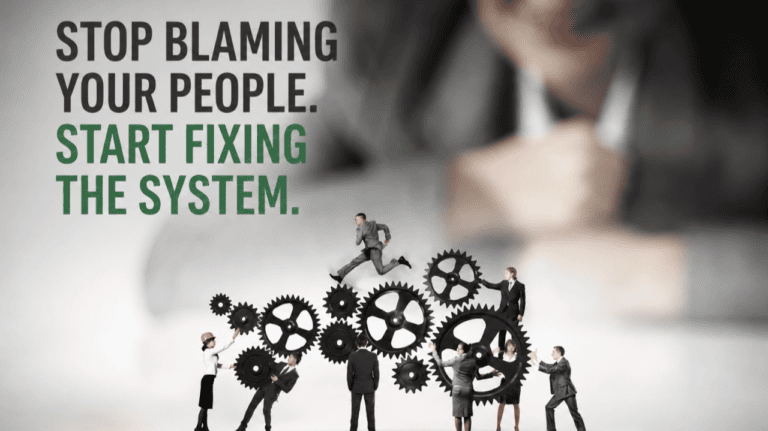

“The Role Mismatch Risk” is one of the most overlooked threats in modern business leadership. Companies often assume that hiring experienced people automatically creates results. It does not. A strong performer in the wrong role can quietly become a source of friction, delay, and organizational confusion.
The problem is rarely talent. The problem is alignment.
Many organizations promote based on loyalty, industry tenure, or revenue history without evaluating whether the individual’s natural strengths actually match the operational demands of the role. A top salesperson may struggle as a sales manager. A visionary founder may fail at process leadership. A technically brilliant executive may weaken culture because communication is not their strength.
The cost of this mismatch compounds over time.
Teams lose clarity. Decision-making slows. Accountability weakens. What most companies call a performance problem is often a leadership alignment problem.
High performers don’t burn out because they lack ability. They burn out because the expectations placed on them no longer match the structure surrounding them. When capability and responsibility fall out of alignment, frustration follows. Then the organization starts compensating for the breakdown—more meetings, more oversight, more approvals, more firefighting. What looks like poor execution is usually a structural failure hiding in plain sight.
That risk multiplies during growth.
As companies scale, roles evolve faster than people do. The leader who helped build the business from $2 million to $10 million may not be the leader who is equipped to take it to $50 million. Early growth rewards hustle, adaptability, and relationship-driven leadership. Scaling rewards operational discipline, systems thinking, decision architecture, and the ability to build organizations that function beyond individual effort.
Most companies avoid confronting that reality because the conversation feels personal. But avoiding it carries a cost. Leaders get promoted beyond their current competencies while teams quietly absorb the consequences through confusion, bottlenecks, inconsistent execution, and declining accountability.
Strong organizations understand something weaker organizations resist:
Raw talent is not enough. Role fit matters. Because the wrong leader in the wrong stage of growth doesn’t just slow momentum. They force the entire organization to compensate for the mismatch
They assess leaders based on decision velocity, communication style, adaptability, operational discipline, and ability to scale complexity. They separate loyalty from suitability. Most importantly, they create structures where people can operate in positions that maximize their strengths instead of exposing their weaknesses.
Role mismatch is not failure. It is misalignment.
When businesses correctly align people with responsibilities that fit their capabilities, execution accelerates. Teams stabilize. Accountability improves. Culture strengthens because people gain confidence from operating where they create the most value. Organizations rarely collapse from a lack of talent alone. More often, they stall because the right people are carrying the wrong responsibilities.