AI can process more data in a minute than most of us will see in a lifetime. It can flag trends, forecast demand, and surface insights we’d never catch on our own. But for owners, sales leaders, and merchant execs, here’s the truth that matters most: none of that replaces the judgment that runs your business.
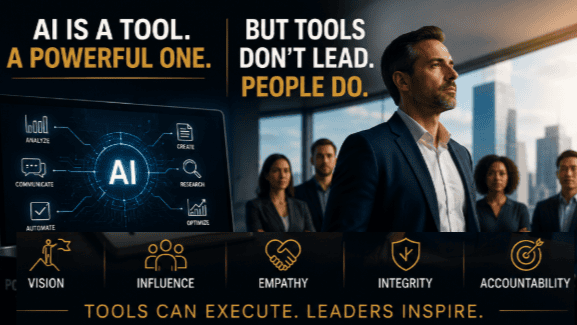
AI is a tool. A powerful one. But tools don’t lead. People do.
Think about the decisions that actually move the needle in your organization. Which market to enter. Which deal to walk away from. How to handle a customer relationship that’s gone sideways. These aren’t spreadsheet problems — they’re judgment calls, shaped by experience, values, and an understanding of context that no model fully captures.
That’s where leadership comes in.
Strategic judgment means taking AI-generated insights and applying real-world context — knowing when the data is right, and when it’s missing something. Ethical responsibility means every action still has to align with what your organization stands for, not just what’s technically optimal. Relationship management — the trust, empathy, and influence that keep teams aligned and customers loyal — still runs on human connection. No algorithm closes a deal built on years of trust.
Negotiation is another place this shows up clearly. Outcomes are shaped by intent, emotion, and persuasion — the read of a room, the pause before a counteroffer, the instinct for when to push and when to give ground. That’s human terrain.
And when priorities shift or risk tolerance needs recalibrating, it’s leaders who rally people around what matters and decide which uncertainties are worth taking on.
AI will keep getting smarter. That’s not a threat — it’s an opportunity, if you use it right. But the businesses that win won’t be the ones that hand over the wheel. They’ll be the ones where leaders use AI to sharpen their judgment, not replace it. The algorithm can inform the decision. The human still makes it. Click ‘Like’ and share your #1 AI tool for multiplying time in the comments below!