Many leaders believe their title gives them authority.
It doesn’t.
Others believe vision inspires people to follow.
It helps—but only for a while.
Leadership is not sustained by position, charisma, or even strategy. It is sustained by trust. And trust is earned through one behavior that never goes out of style: integrity.
Integrity isn’t a leadership value. It’s a leadership operating system.
It is the discipline of ensuring your decisions, actions, and standards remain aligned—even when circumstances make compromise easier.
In high-performing organizations, integrity isn’t measured by mission statements hanging on conference room walls. It is measured by what leaders do when no one is watching, when targets are missed, when difficult conversations cannot be avoided, and when taking responsibility carries a personal cost.
That consistency becomes a competitive advantage.
Integrity Reduces Organizational Friction
Most executives think about productivity in terms of technology, process, or talent.
The highest-performing organizations understand something different.
Every organization pays a tax on uncertainty.
When employees question leadership’s motives, information slows down. Decisions become cautious. Meetings multiply. Politics replace collaboration. High performers disengage because they spend more time protecting themselves than serving customers.
Integrity removes that tax.
Amazingly enough, leadership requires you to honor your commitments, and admit when you make mistakes. Lastly, communicate honestly by making decisions based on principles instead of what’s convenient or easy. When you do these things people stop wasting energy, interpreting motives and start focusing on execution.
Trust accelerates everything.
Trust Is a Business Asset
Trust is often described as a cultural value. It is far more than that. Trust is an operational asset that improves execution across every function of the business.
- Organizations built on trust make decisions faster because teams aren’t waiting for hidden agendas to surface.
- Sales organizations forecast more accurately because bad news moves upward instead of being buried.
- Innovation improves because employees understand that they don’t have to fear political consequences because they challenge a leader’s assumptions.
- Customer relationships deepen because clients experience consistency instead of promises that change with quarterly pressure.
The financial impact is measurable.
- Lower turnover.
- Higher engagement.
- More predictable forecasting.
- Faster execution.
- Stronger customer retention.
- Greater enterprise value.
These aren’t soft outcomes. They’re business outcomes.
Integrity Is Revealed Under Pressure
Anyone can appear trustworthy when business is growing. Leadership is tested when it isn’t. Whereas, pressure exposes priorities.
When revenue declines, there’s shifts in the marketplace, or unexpected problems start to emerge. Remember, people watch leadership more closely than they listen to leadership.
- Do leaders own mistakes?
- Do they communicate difficult truths early?
- Do they protect the mission instead of protecting their image?
These are the moments that determine whether trust compounds or disappears.
Being transparent when times are the toughest reinforces the leaders credibility, especially during times of uncertainty.
Leaders who shift blame, withhold information, or rewrite the narrative may protect themselves temporarily, but they weaken the very foundation that future success depends upon.
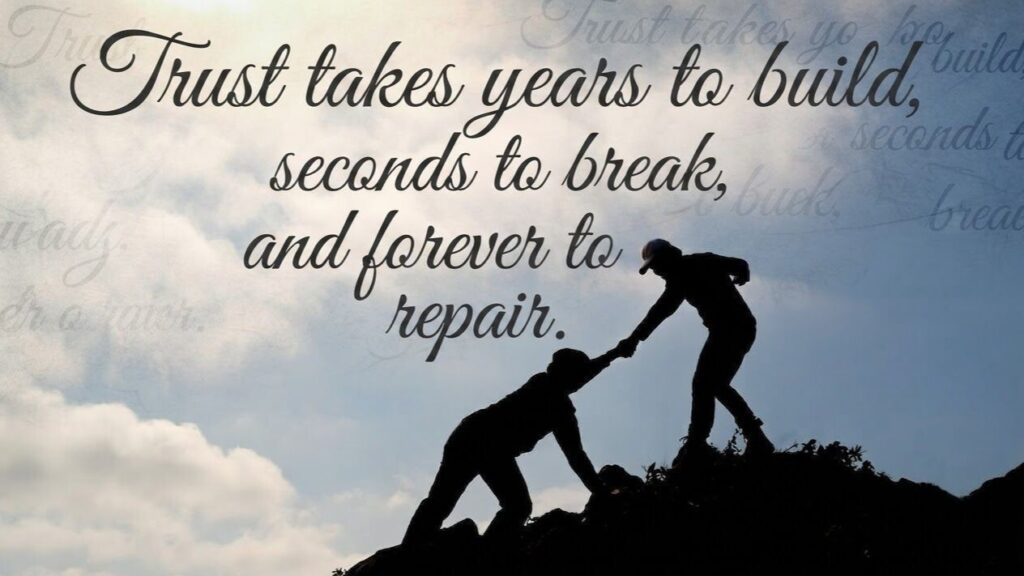
Trust is difficult to earn, remarkably easy to lose, and extraordinarily expensive to rebuild.
The Leadership Multiplier
- Every strategy depends on execution.
- Every execution depends on people.
- And people perform at their highest level only when they trust the individuals asking them to follow.
- That’s why integrity isn’t simply a personal characteristic.
- It’s a business strategy.
- The strongest organizations aren’t built by leaders who demand trust.
- They’re built by leaders whose actions make trust inevitable.
- Leadership can survive on authority for a season.
- It can survive on vision for a project.
- But it only scales when integrity becomes the standard and trust becomes the culture.
- Because in the end, people don’t follow titles.
- They follow leaders whose actions consistently prove they’re worth following.